

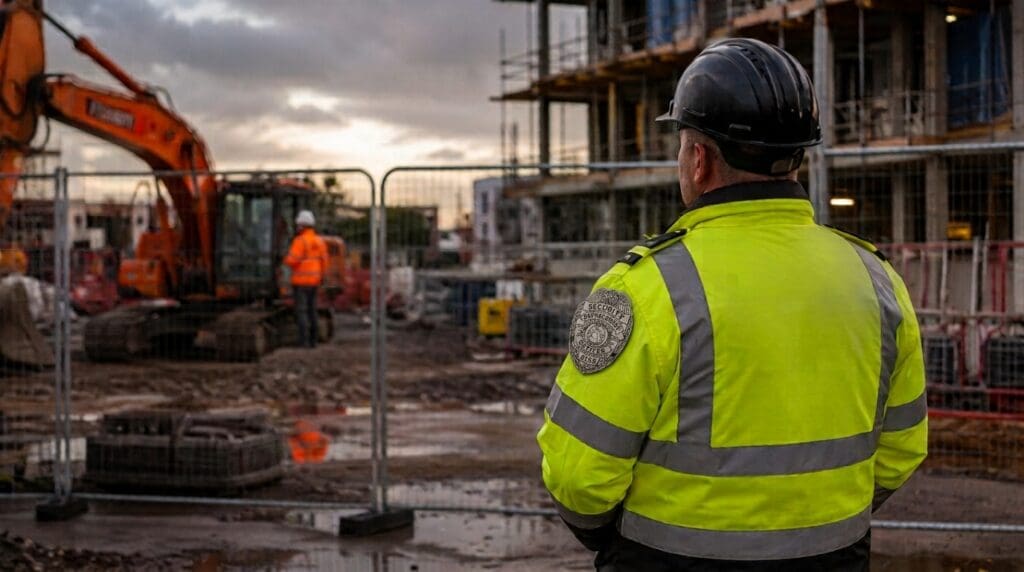
We came back to the site on a Monday in July and the copper was gone. Somebody had cut through the back fence over the weekend, worked unhurried through two nights, and stripped the wiring runs along with a generator and a pallet of tools we had staged for the week ahead. The cameras caught all of it in clean detail, which told us exactly how thorough the crew had been and exactly nothing that helped us stop them. I remember standing there with the superintendent, both of us realizing the footage was a record of a loss, not a defense against one. The insurance covered a fraction, the schedule slipped, and the premium went up the next year. That weekend taught me the difference between watching a theft happen and preventing it.
If you manage a construction site and you are trying to keep equipment, tools, and materials from walking off, this blog lays out the physical security strategies that actually deter thieves, the theft patterns specific to Florida, and how a real presence on-site closes the gap that cameras alone leave open.
Why Construction Sites Are Prime Targets for Theft
Understanding why thieves single out construction sites is the first step toward stopping them, because the vulnerabilities are structural rather than accidental. A jobsite is built to be open, temporary, and full of valuable, movable things, which is exactly what a thief looks for.
Here’s what makes a jobsite so attractive:
High-value, portable, hard-to-trace assets
Construction sites hold a concentration of targets few other properties match. Thieves go after heavy machinery like skid steers and generators, power tools and portable equipment, and raw materials such as copper wiring and lumber, all of which carry high resale value and rarely carry identifying marks. Copper is a perennial favorite because it converts to cash at any scrap yard, and a single site can lose tens of thousands of dollars in wiring over one weekend before anyone notices Monday morning. The combination of value, portability, and anonymity turns a jobsite into an inventory of easy money.
An open structure that invites off-hours theft
A construction site is a work in progress, which means it lacks the locked doors and solid walls that protect a finished building. That open structure leaves equipment exposed overnight and on weekends, when nobody is watching and a crew can work undisturbed for hours. Theft concentrates precisely in those off-hours gaps, and it spikes during long holiday weekends when a site can sit unattended for 72 to 96 straight hours. The early phases of a project carry added risk, since large quantities of material and equipment get staged on-site before any permanent structure exists to shield them.
The Florida Theft Problem Is Worse Than the National Average
For a South Florida contractor, the national statistics understate the exposure, because Florida consistently ranks among the worst states for construction and equipment theft. Knowing the local picture helps size the security investment correctly.
Here’s what the Florida numbers actually show:
Florida ranks among the top states for equipment theft
Florida sits in the top tier of states for construction equipment theft, alongside Texas and California, and the reasons are structural. A year-round building season keeps more equipment in the field for more months, and proximity to major ports supports quick resale and export of stolen machinery. Miami has ranked among the top cities nationally for equipment theft, a reflection of a sprawling construction market sitting next to shipping infrastructure. In May 2026, the Hillsborough County Sheriff’s Office arrested 14 people and seized an estimated $5 million in stolen goods from a ring that stole from Home Depot and Lowe’s stores and from construction sites. Baseline risk in South Florida is simply higher than the national figures suggest.
Recovery is rare and the real cost runs deeper
Stolen construction equipment is seldom recovered, with recovery rates commonly estimated in the range of 20 to 25 percent, so most losses are permanent. The damage also extends well past the price of the missing item. A single theft triggers rental costs to replace the equipment, lost productivity while a crew sits idle, schedule delays that threaten milestone dates, and higher insurance premiums the following year. Those downstream costs frequently exceed the value of the stolen asset itself, which is why prevention pays off far more than reaction.
The Physical Security Strategies That Actually Deter Theft
Effective construction site theft prevention layers several measures so that defeating one still leaves a thief facing others. No single control stops a determined crew, but a well-built stack of them makes your site a harder target than the one down the road.
Here’s the layered approach that works:
Control access and harden the perimeter
Limiting who can get onto the site is the foundation of prevention. A secured perimeter fence, a single controlled entry point, locked gates, and clear signage all raise the effort a thief has to expend. Sign-in and sign-out logs for workers and deliveries create accountability and a record of who was on-site and when. The goal is to remove the easy, unnoticed entry that most opportunistic theft depends on, forcing anyone with bad intent to work harder and stay longer, which raises their risk of being seen.
Light the site and eliminate blind spots
Thieves prefer darkness, so lighting is one of the cheapest and most effective deterrents available. Full illumination of the perimeter, storage areas, and equipment staging zones removes the cover a crew relies on and makes any activity visible to passing patrols, neighbors, and law enforcement. Pay particular attention to corners, material laydown areas, and the back of the site where fences meet, since those blind spots are where entry usually happens. A brightly lit site signals that someone is paying attention, which is often enough to send a thief looking elsewhere.
Register, mark, and inventory equipment
Making your assets traceable both deters theft and improves the slim odds of recovery. Record serial numbers, photograph equipment, and mark tools and machinery with company identifiers or the property identification number system used by law enforcement and the National Equipment Register. Registered, marked equipment is harder to resell and easier to return if recovered. Keeping a current inventory also means you know immediately what is missing, which speeds both the police report and the insurance claim when a theft does occur.
Stage materials and equipment strategically
Where you place things on-site changes how vulnerable they are. Store high-value materials like copper and tools in locked containers or secured areas rather than leaving them in the open, and position equipment away from the perimeter where it can be hooked and hauled quickly. Schedule deliveries of expensive materials close to when they will be used rather than staging them for weeks, since material sitting on-site during early project phases is a standing invitation. Thoughtful staging shrinks the window and the opportunity for theft.
Why On-Site Presence Beats Surveillance Alone
Every strategy above raises the effort a thief must make, but none of them intervenes in real time. That is the gap a physical security presence fills, and it is the difference between recording a theft and preventing one. This is where most theft-prevention plans fall short.
Here’s what a real presence adds that technology cannot:
Cameras record, officers prevent
A surveillance camera is a valuable tool, but its role is documentation. It captures what happened after the fact, which helps an investigation and a claim yet does nothing to stop a crew mid-theft on a Saturday night. A trained security officer or patrol changes the equation by introducing the one thing thieves avoid, which is a person who can see them, challenge them, and call law enforcement in the moment. A visible presence deters the approach entirely, so the theft that a camera would have merely filmed never begins. On a site that relies on cameras alone, the footage becomes evidence of a loss rather than a defense against it.
Coverage timed to when theft actually happens
Because construction theft concentrates off-hours, on weekends, and across long holiday windows, security coverage delivers the most value precisely when the site is otherwise empty. A patrol that moves through the site on an irregular schedule, or a posted officer during the highest-risk hours, closes the exact gap thieves exploit. Professional construction site security services provide that off-hours presence, tying together the access control, lighting, and staging measures into a plan with a human being actually watching over it. That presence is what turns a collection of precautions into genuine deterrence.
Protect Your Site Before the Next Weekend
Construction site theft prevention comes down to making your site harder to hit than it is worth, and then putting someone there to watch it when the crew goes home. The physical measures raise the effort a thief has to make, and an on-site presence closes the off-hours gap where most losses happen. In a top-tier theft state like Florida, that combination is not overkill, it is the cost of protecting your budget and your schedule.
Almond Tree Security Services protects construction sites across Miami-Dade, Broward, and Monroe County with licensed officers and patrols timed to the overnight, weekend, and holiday hours when theft actually happens. If you want a clear read on where your site is exposed, take a look at our construction site security services and reach out whenever you would like to talk it through. No pressure either way.
Frequently Asked Questions
What is the most effective way to prevent construction site theft?
The most effective approach layers multiple measures: controlled access, full lighting, equipment registration, secure material staging, and an on-site security presence during off-hours. No single measure stops a determined thief, but together they make a site a hard target. A visible guard or patrol adds real-time deterrence that cameras alone cannot provide.
When does most construction site theft happen?
Most theft occurs off-hours, when sites sit unattended. Weekends and long holiday weekends are especially high-risk, since a site can be empty for 72 to 96 consecutive hours. Summer months and the early phases of a project, when materials are staged before permanent structures exist, also see elevated theft activity.
How common is construction equipment theft in Florida?
Florida ranks among the top states in the country for construction and equipment theft, driven by a year-round building season and proximity to ports that ease resale and export. Miami has ranked among the top cities nationally for equipment theft. In 2026, a Hillsborough County theft ring that also targeted construction sites was caught with an estimated $5 million in stolen goods.
Do security cameras stop construction site theft?
Cameras help by documenting theft and supporting investigations and insurance claims, but they record events rather than prevent them. A camera cannot intervene when a crew arrives on a Saturday night. Pairing surveillance with an on-site security presence provides the real-time deterrence that actually stops theft before it starts.
Is stolen construction equipment usually recovered?
No. Recovery rates for stolen construction equipment are low, commonly estimated around 20 to 25 percent, so most losses are permanent. Beyond the lost asset, theft brings rental replacement costs, lost productivity, schedule delays, and higher insurance premiums, which is why prevention is far more cost-effective than recovery.