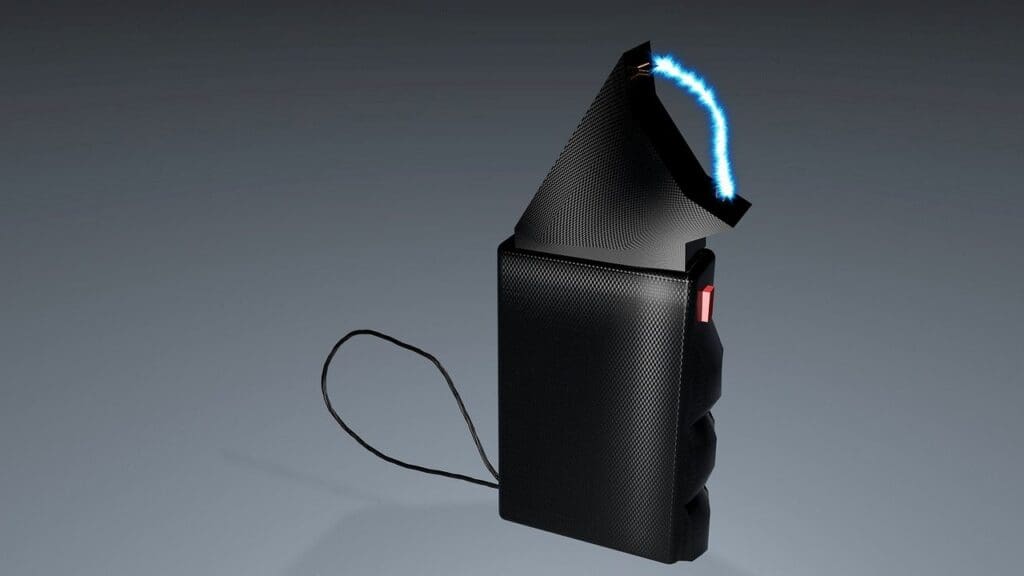

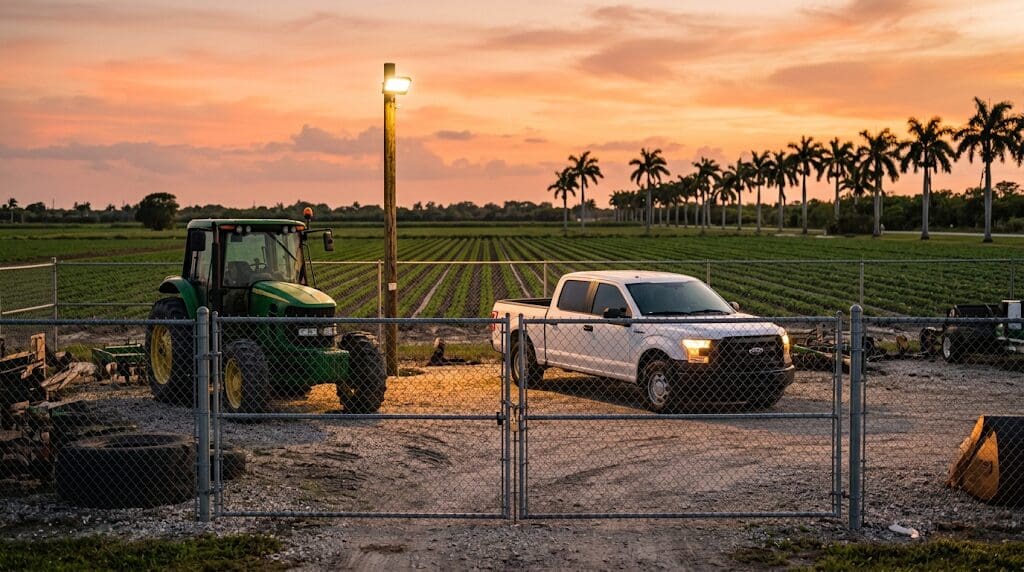
How to prevent tractor theft: make your tractor hard to start, hard to reach, and easy to identify. Remove the fuses or battery when you park it, keep it behind a locked and lit fence, record its serial number, and hide a GPS tracker on it. Larger farms should also use security patrols.
How to prevent tractor theft in 6 steps:
- Take the keys and pull the main fuses every time you park.
- Install a hidden battery or fuel shutoff switch.
- Park out of sight behind a locked gate, with lights on the equipment yard.
- Photograph and record the serial number of every machine.
- Hide a GPS tracker on the tractor, plus a backup tag.
- Use security patrols if equipment sits in remote fields overnight.
Equipment theft is a big business. The National Equipment Register estimates that $300 million to $1 billion in heavy equipment is stolen every year, according to its theft prevention and recovery page. With the South Florida growing season starting in October, tractors and fuel are about to sit in open fields for months.
What most farmers don’t know
- Your key may not be unique. Many tractors of the same brand share keys, so a thief may already have one that fits.
- Disabling the engine won’t stop a trailer. Professional thieves load tractors onto flatbeds without starting them.
- Miami-Dade has an agricultural crime unit. Report farm thefts to the Sheriff’s Office Agricultural Patrol Section.
What Are the Most Common Methods for Preventing Tractor Theft?
The most common methods for preventing tractor theft are disabling the tractor, blocking access to it, marking it, and tracking it. Use at least three together, because each one covers a weakness in the others.
| Method | What it stops | Where it fails |
|---|---|---|
| Disable (fuses, battery switch, fuel shutoff) | A thief driving the tractor away | A thief who loads it onto a trailer |
| Block (fence, locked gate, lights, parking) | Easy access to the equipment | A thief who cuts the fence or chain |
| Mark and record (serial numbers, photos, hidden marks) | Resale, and helps recovery | Doesn’t stop the theft itself |
| Track (GPS, hidden Bluetooth tags) | Losing the machine for good | Thieves who find and remove trackers |
| Patrol or guard | Theft in progress, by putting people on site | Costs more, and patrols are periodic, not constant |
Layer at least three of these. A tractor that’s disabled, fenced, and tracked is a much harder job than one that’s only locked.
How Do You Secure a Tractor From Theft Overnight?
To secure a tractor from theft overnight, park it out of sight, pull the fuses or disconnect the battery, and block the way out with another vehicle or a locked gate. Thieves pick equipment they can see from the road and take in minutes.
Parking
- Keep it out of view from the road. A tractor nobody can see is a tractor nobody plans to steal.
- Circle your equipment. Park large machines facing inward, with smaller equipment like ATVs and mowers in the middle.
- Block the exit. Park a heavy implement or truck in front of the gate or shed door.
Disabling
- Pull the main fuses and take them with you.
- Install a hidden battery disconnect switch, ideally one that needs a key.
- Add a fuel line shutoff in a spot a thief won’t think to check.
- Take the keys every time. Many tractors of the same brand use the same key, so a thief may already have one that fits yours.
Lighting and access
- Light the equipment yard with motion-activated or dusk-to-dawn lights.
- Lock gates and check chains. A cut chain is often the first sign of a planned theft.
For a full property-wide plan, see our farm security checklist for South Florida.
Do Tractor Anti-Theft Devices and GPS Trackers Work?
Yes, tractor anti-theft devices work, but mostly to help you get the tractor back, not to stop the theft. A GPS tracker shows police where the machine went. An immobilizer stops the engine from starting, but not a thief with a trailer.
What works best:
- A hardwired GPS tracker with alerts when the tractor moves outside a set area
- A second, hidden Bluetooth tag as backup, since experienced thieves search for obvious trackers
- Immobilizers that stop the engine starting without a code or key fob
- Cameras aimed at gates and the equipment yard, which help police identify vehicles
Can thieves beat anti-theft devices?
Yes, devices can be beaten. A thief who brings a flatbed trailer doesn’t need your engine to start, and a thief who finds your tracker can pull it in seconds. Devices also can’t tell you someone is cutting your fence right now. That’s the gap physical security fills, and it’s why larger farms combine devices with people.
When Does a Farm Need Security Patrols or Guards?
A farm needs security patrols or guards when equipment or fuel keeps going missing, when expensive machinery sits in remote fields overnight, or during planting and harvest when the most equipment is out. Locks and devices slow thieves down; people on the property stop them.
Signs it’s time:
- Repeat losses, such as cut fences, missing fuel, or tools disappearing
- Equipment left in open fields overnight during the season
- Remote parcels you can’t see from the house or office
- Suspicious vehicles slowly driving by, especially at night
- Nurseries with stock and equipment that’s easy to load and resell
Should a farm use a mobile patrol or an on-site guard?
Use a mobile patrol to check several fields through the night, and an on-site guard to protect one high-value yard constantly.
| Mobile patrol | On-site guard | |
|---|---|---|
| Best for | Several parcels, or checks through the night | One high-value yard or storage area |
| Presence | Periodic visits | Constant |
| Cost | Lower | Higher |
| Limitation | Gaps between visits | Covers one location |
At Almond Tree Security Services, an unarmed officer costs $32 per hour and an armed officer $40 per hour, with a 6-hour minimum. Patrol vehicles are billed separately at $14 per hour when running or on patrol and $10 per hour when parked. Rates as of September 2026.
For many farms, the best security for theft prevention is a mix: devices on every machine, and patrols during the months when the most equipment is in the field.
Why does a local Homestead team matter?
A local team knows the land, the roads, and the season. Almond Tree Security Services is headquartered in Homestead, in the middle of South Dade’s farming belt. Founder Steve Garrison comes from a generational South Florida farming family, and the company’s leadership includes former police executives. That means officers who know what a Redland nursery or a winter vegetable field actually looks like at 2 a.m.
Learn more about our agriculture security services or our mobile security patrols.
What Should You Do If Your Tractor Is Stolen?
If your tractor is stolen, call the police right away and give them the serial number, photos, and tracker location. Then report it to Florida’s agricultural law enforcement, the National Equipment Register, and your insurer. The first few hours matter most.
- Call law enforcement right away. Don’t try to recover the equipment yourself, even if your tracker shows where it is.
- In Miami-Dade, report to the Sheriff’s Office Agricultural Patrol Section. It asks farmers to report missing inventory, cut fences or gate chains, and any suspicious people or vehicles, including tag, make, model, and color, through its Report an Agricultural Crime page.
- Contact Florida’s Office of Agricultural Law Enforcement, which investigates crimes involving farms and farm equipment. Its after-hours line is listed as 1-800-342-5869.
- Report the theft to the National Equipment Register. Filing a theft report is free, with no fee if the equipment is recovered.
- Call your insurer with your records and the police report number.
How can you tell if a tractor is stolen?
To tell if a tractor is stolen, check its serial number or Product Identification Number (PIN) plate against the paperwork, and look for tampering like fresh paint, new rivets, or a ground-down plate. You can also run the number through the National Equipment Register’s IRONcheck service before you buy.
FAQ
Does a tractor have a VIN number?
No. Tractors don’t use the 17-digit vehicle identification number found on cars. They use a serial number or Product Identification Number (PIN), stamped on a metal plate. Record it, photograph it, and keep a copy off the farm so police can identify your tractor if it’s stolen.
Where is the serial number located on a tractor?
The serial number or PIN is usually on a metal data plate attached to the frame, often near the front axle, the engine, or under the operator’s station. The exact spot varies by manufacturer, so check your operator’s manual and photograph the plate once you find it.
Does insurance cover tractor theft?
Often, but it depends on your policy. Some farm policies cover equipment theft, while others need a separate equipment rider, and some insurers require anti-theft devices. Ask your agent exactly what’s covered and whether devices lower your premium.
What is the best way to prevent tractor theft?
The best way to prevent tractor theft is to layer protection. Disable the tractor when parked, keep it behind a locked fence with lighting, record serial numbers, and add GPS tracking. On larger or remote farms, add security patrols during the growing season.
How much does farm security cost in South Florida?
At Almond Tree Security Services, officers cost $32 per hour unarmed or $40 per hour armed, with a 6-hour minimum. Patrol vehicles are billed separately at $14 per hour on patrol. Rates are as of September 2026, and the right mix of farm equipment theft protection services depends on your acreage and equipment.
Conclusion
In short, here’s how to prevent tractor theft: make your farm slow, visible, and well-recorded. Start this week by photographing every serial number and locking up your fuses, before the season puts equipment in the field.
If your farm has remote parcels, repeat losses, or equipment you can’t watch at night, patrols close the gap that locks and devices leave open.
Almond Tree Security Services is a Homestead, Florida security agency (Florida Security Agency License B 3500420) serving Miami-Dade, Broward, and Monroe County. It responds to new requests within 2 hours and deploys officers within 4.
Tell us what equipment you’re protecting and whether your property is fenced. Request a free farm security assessment.